The extraordinary life o.., p.1
The Extraordinary Life of Sam Hell, page 1
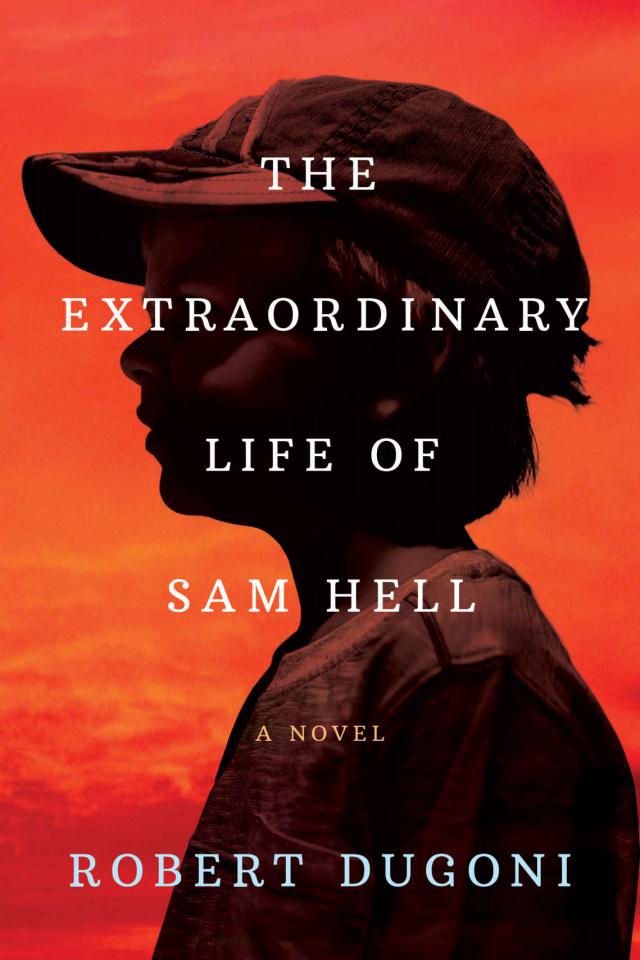


PRAISE FOR ROBERT DUGONI
“Dugoni is a superb storyteller.”
—Boston Globe
“[A] swift, engrossing story.”
—Seattle Times
“[Dugoni’s] characters are richly detailed and true to life.”
—Kirkus Reviews
“Dugoni has a gift for creating compelling characters.”
—Associated Press
PRAISE FOR THE TRACY CROSSWHITE SERIES
“Readers must now once again wait impatiently for the next book by Robert Dugoni to arrive.”
—Suspense Magazine
“Dugoni does a superior job of positioning for maximum impact, especially in a climactic scene.”
—Publishers Weekly
“Dugoni continues to deliver emotional and gut-wrenching, character-driven suspense stories that will resonate with any fan of the thriller genre.”
—Library Journal (starred review)
“Dugoni does a masterful job . . . If you are not already reading his books, you should be!”
—BookReporter
“Dugoni has become one of the best crime novelists in the business, and his latest featuring Seattle homicide detective Tracy Crosswhite will only draw more accolades.”
—Romantic Times (top pick)
ALSO BY ROBERT DUGONI
The 7th Canon
Damage Control
The Tracy Crosswhite Series
My Sister’s Grave
Her Final Breath
In the Clearing
The Trapped Girl
Close to Home
The Academy (a short story)
Third Watch (a short story)
The David Sloane Series
The Jury Master
Wrongful Death
Bodily Harm
Murder One
The Conviction
Nonfiction with Joseph Hilldorfer
The Cyanide Canary
This is a work of fiction. Names, characters, organizations, places, events, and incidents are either products of the author’s imagination or are used fictitiously. Any resemblance to actual persons, living or dead, or actual events is purely coincidental.
Text copyright © 2018 by Robert Dugoni
All rights reserved.
No part of this book may be reproduced, or stored in a retrieval system, or transmitted in any form or by any means, electronic, mechanical, photocopying, recording, or otherwise, without express written permission of the publisher.
Published by Lake Union Publishing, Seattle
www.apub.com
Amazon, the Amazon logo, and Lake Union Publishing are trademarks of Amazon.com, Inc., or its affiliates.
ISBN-13: 9781503949003 (hardcover)
ISBN-10: 1503949001 (hardcover)
ISBN-13: 9781503948976 (paperback)
ISBN-10: 1503948978 (paperback)
Cover design by Rex Bonomelli
First edition
For my mother, Patty Branick Dugoni, who gave me my love of reading and my passion for writing. None of this would have been possible without your unconditional love, support, and faith. I could not have asked for a better childhood or better parents. Thank you for making my life extraordinary.
CONTENTS
START READING
FOREWORD
PART ONE A STAIN ON THE CARPET
1
2
3
4
5
6
7
8
9
10
11
12
13
14
15
16
17
18
19
20
PART TWO THE BIKE ACCIDENT
1
2
3
4
5
6
7
8
9
10
11
12
13
14
PART THREE THE MICK
1
2
3
4
5
6
7
8
9
10
11
12
13
14
15
16
17
18
PART FOUR NIGHTMARES AND FANTASIES
1
2
3
4
5
6
7
8
9
10
11
12
13
14
15
16
17
18
19
20
21
PART FIVE NONE OF US ARE GETTING OUT OF HERE ALIVE
1
2
3
4
5
6
7
8
9
10
11
12
13
14
15
16
17
18
19
20
21
22
23
24
25
26
27
28
29
30
PART SIX HELLO DARKNESS, MY OLD FRIEND
1
2
3
4
5
6
7
8
9
10
11
12
PART SEVEN SAYING GOODBYES
1
2
3
4
5
6
7
8
9
10
11
12
13
14
15
EPILOGUE
ACKNOWLEDGMENTS
ABOUT THE AUTHOR
There comes a day in every man’s life when he stops looking forward and starts looking back.
—Maxwell Hill
FOREWORD
My mother called it “God’s will.” At those moments in my life when things did not go as I had hoped or planned, and there were many, she would say, “It’s God’s will, Samuel.” This was hardly comforting to a six-year-old boy, even one “blessed” with a healthier dose of perspective than most children at that age.
For one, I never understood how my mother knew God’s will. When I would ask her that very question, she would answer with another of her stock refrains—“Have faith, Samuel.” I realize now that this was circular reasoning impregnable to debate. My mother might just as well have responded with that other impenetrable parental reply, “Because I said so.”
Now, as an adult with that healthy dose of perspective we call experience, I realize my mother was right, as she was so often when it came to my life. We think we have control over our lives, especially when we’re young and seemingly invulnerable. We’re told we can do anything we set our minds to, that the world is our oyster, that all we have to do is shuck the hard shell and pluck the rich, nourishing meat inside. I realize now, however, that the shell is a lot harder than I appreciated, and that I never could have controlled or even predicted the things that would happen in my life. We believe we choose the paths we take when we come to those forks in our lives—the friends we make, the careers we undertake, the spouses we marry.
But we don’t.
Life is either a collision of random events, like billiard balls during a break careening off and into one another, or if you are so inclined to believe, our predetermined fate—what my mother took such great comfort in calling God’s will.
I desperately wanted to believe my mother was right.
I wanted to believe God had a plan for me when David Bateman hit me in the face with a rubber ball on the schoolyard playground and placed us on a cataclysmic course ultimately leading to his death. I wanted to believe God sent Ernie Cantwell from Detroit, Michigan, the only African American child in my class, to be the friend I so desperately needed. I wanted to believe it had been God’s design that Mickie Kennedy would storm into my life in the sixth grade like a Midwest tornado, uprooting every precept I’d been taught about the roles of boys and girls and toppling the Catholic ideology my mother and the nuns at Our Lady of Mercy spoon-fed us as a remedy for every personal and societal ailment. Mostly, I wanted to believe that I was fated to live the extraordinary life my mother so ardently believed I was destined for, the life she dutifully prayed for each night as she sat on our floral couch in our wood-paneled family room, kneading the beads of her rosary.
Was it God’s will that I should buy this house just two blocks from the shingled home in which I was raised and live in a town I had once sought desperately to escape? I thought I purchased my home because it was a sound investment, a plot of land in an up-and-coming real estate market. My parents had not been so practical. My mother’s only real estate criteria had been that our home be within walking distance of a Catholic church and school. The end result, however, has been the same. Except for a decade when I fled, I have lived my entire life close enough to hear the bells ringing in the st
PART ONE
A STAIN ON THE CARPET
1
1989
Burlingame, California
The bells sounded so clear they caused me to sit up, though intuitively I knew I could not have heard them in that sterile, cramped doctor’s office.
“Everything okay?” Dr. Kenji Fukomara peered at me over his glasses, an inquisitive gaze.
It was an interesting question given my circumstances. I sat on a narrow examination table, one sheet of thin paper crinkling beneath me and a second sheet draped over my naked lower half. That morning I’d shaved my groin in anticipation of my vasectomy, a task in which I had taken great care. During an earlier consult, Dr. Fukomara told me a story of how a particularly hairy patient caught fire during the cauterization, and the doctor immediately commenced to beat at the flames. Urban myth, probably, but the image of Dr. Fukomara pounding my groin with his fists had caused me to be precise.
So instead of asking if he, too, had heard the church bells, I said, “Can we wait a minute?”
“It’s perfectly natural to be nervous,” Dr. Fukomara said. He stood at a stainless-steel sink scrubbing his hands with disinfectant soap and rinsing them beneath a stream of hot water.
“I just need a moment.” I sat up farther, the paper beneath me protesting.
The bells had sounded exactly like those that rang in the steeple of Our Lady of Mercy, the Catholic church just blocks from my boyhood home, which made me think of my mother, whom I always considered more infallible than the pope when it came to Catholic ideology. Though I was no longer a practicing Catholic, the remnants of her steadfast tutelage, like those bells, still occasionally rang loud and clear. Catholic guilt, they call it; my mother would have chastised my decision to get a vasectomy as a violation of a church tenet.
“Is there something in particular, some concern?” Dr. Fukomara asked, drying his hands with a coarse brown paper towel.
“I wish there was,” I said. “Something particular, I mean.”
“You won’t have any change in sexual function.” He’d given me the same assurance in our consult. “And you’ll still be able to pee like a racehorse”—as well as the same joke. Dr. Fukomara smiled easily. Humor was his technique to put his patients at ease, a necessity when your specialty involved cutting other men’s scrotums. The week before, when he walked into that same room for my fifteen-minute consult, he’d held a machete and had donned Coke bottle–thick, magic-store glasses. “This won’t hurt a bit,” he’d deadpanned.
“Is it your wife?” he asked. “Is she having second thoughts?”
“Oh no, she’s very sure,” I said, though Eva was not my wife. Eva and I lived together in the house I’d bought two blocks from the church I no longer attended with the steeple bells I no longer heard except at odd moments, like that one.
Eva moving in with me had seemed like a good idea at the time, but as the months had passed, our living arrangement had started to feel like it was more for convenience than love, which, ironically, was how I had pitched her the idea. “You won’t have to pay rent,” I’d rationalized. “And we’ll save on utilities and groceries and other incidentals.” It was all very practical.
“What about your mother?” had been Eva’s reply.
From my mother’s perspective, Eva and I were living in sin. She’d never used those words, but she’d also not set foot in my house from the moment Eva did, and on those rare occasions when the three of us got together, usually for dinner at a restaurant, my mother was cordial but never asked about the details of Eva’s and my relationship. Neither did I. Eva and I had discussed marriage, but always in vague terms that also usually provoked a reference to my mother.
“I won’t get married just to appease her,” Eva had said. “And when I do, it won’t be in a Catholic church, either.”
Eva’s use of the pronoun I as opposed to we was not lost on me. Nor was the fact that Eva always seemed to refer to my mother when the subject of marriage came up and never to us.
Dr. Fukomara smiled and walked closer to the table. “And you?”
“What’s that?” I asked, having missed his question.
“Are you having second thoughts?”
“Do you have kids?” I asked.
“Three boys,” he said. “We sent our last off to college in September. We’re officially empty nesters. We can run around the house naked and have sex in any room.”
“Do you?” I asked.
His smile waned. “How old are your children?”
“I don’t have any,” I said, which seemed to give him pause. He fixed me again with that inquisitive look. I was just thirty-two. Eva was three years older, a pilot for Alaska Airlines committed to her career and uncertain she wanted children, though apparently very certain she did not want mine—hence, my shaved groin and decision to end my chance to be a father.
“And you think you still might want to?”
“I don’t know.” I didn’t think I did. I’d told myself as much for most of my adult life, but now at the moment of decision, I was no longer so certain.
Dr. Fukomara nodded. “Listen, I schedule these at the end of my day. I have another patient in the room next door. Think it over. I’ll be back in forty-five minutes.”
But even after Dr. Fukomara had left the room, I could not think it over, not with my past continuing to invade my present. The first recollection started as a trickle that, as soon as I attempted to block it, found another path to weep through, the way water will always bleed through concrete, no matter how many times you patch it. I was recalling a particular moment on an unusually hot summer day when I’d sat beside my father in the shade of a two-hundred-year-old oak tree. It had become our routine to sit in the shade provided by those gnarled branches and broad leaves, my father listing in his wheelchair. I don’t remember much else about that day or even the topic of conversation, but I do remember his words.
“There comes a time in every man’s life,” he’d said in the halting, ghostly voice his stroke had left him, “when he stops looking forward and starts looking back.”
I recall thinking my father too young to be imparting such wisdom, despite his infirmity, and I too young to be receiving it. Now, sitting in Dr. Fukomara’s office, I wondered if I had already reached that time in my life. The thought frightened me, because I had done very little to leave a mark on this world. My death would be noted with nothing more than a headstone bearing the dates of my birth and my death to let the world know I had been here.
I am the only son of an only son. My father’s lineage will end with me.
And as that thought weighed on me, I decided, for no rational reason, that I hated that room with its mustard-yellow walls and poorly disguised cheap pressboard cabinets. I slid off the table and paced the orange linoleum, imagining what Eva might say when she arrived home from her East Coast flight to find I had changed my mind.
“We talked about this,” she’d say. “We agreed.”
But saying “we agreed” was akin to saying the French and British agreed to give Germany most of Czechoslovakia at the Munich Conference. I had grown weary of Eva’s complaints about how condoms numbed the pleasure for her and how a vasectomy was the least intrusive and most effective form of birth control—for her, certainly. But she was not the one facing the blade, or worse, a possible fire and Dr. Fukomara’s beating fists.
My eyes wandered to the stainless-steel metal stand and the gleaming forceps, tweezers, and scalpels. The two mountains of gauze seemed far more than necessary given the small task to be performed. And I again thought of my father, who had never had to make this decision. I knew what he would have said if I had ever confided in him about this trip to the doctor. My father would have said what he always said when my actions dumbfounded him, the same four words he uttered the very first moment he’d laid eyes on me and unwittingly bestowed upon me my name.
“What the Sam Hell?”
2
Burlingame, California
I’d heard the story of my birth so often I could recount it as if I actually recalled the event. For some unknown reason, my mother always chose to begin with the weather.