The Triple Package

The Triple Package

Amy Chua

Politics / History / Parenting & Families

"That certain groups do much better in America than others—as measured by income, occupational status, test scores, and so on—is difficult to talk about. In large part this is because the topic feels racially charged. The irony is that the facts actually debunk racial stereotypes. There are black and Hispanic subgroups in the United States far outperforming many white and Asian subgroups. Moreover, there’s a demonstrable arc to group success—in immigrant groups, it typically dissipates by the third generation—puncturing the notion of innate group differences and undermining the whole concept of 'model minorities.'" The AuthorsMormons have recently risen to astonishing business success. Cubans in Miami climbed from poverty to prosperity in a generation. Nigerians earn doctorates at stunningly high rates. Indian and Chinese Americans have much higher incomes than other Americans; Jews may have the highest of all. Why do some groups rise? Drawing on groundbreaking original research and startling statistics, The Triple Package uncovers the secret to their success. A superiority complex, insecurity, impulse control—these are the elements of the Triple Package, the rare and potent cultural constellation that drives disproportionate group success. The Triple Package is open to anyone. America itself was once a Triple Package culture. It’s been losing that edge for a long time now. Even as headlines proclaim the death of upward mobility in America, the truth is that the oldfashioned American Dream is very much alive—butsome groups have a cultural edge, which enables them to take advantage of opportunity far more than others.•   Americans are taught that everyone is equal, that no group is superior to another. But remarkably, all of America’s most successful groups believe (evenif they don’t say so aloud) that they’re exceptional, chosen, superior in some way.•   Americans are taught that self-esteem—feeling good about yourself—is the key to a successful life. But in all of America’s most successful groups,people tend to feel insecure, inadequate, that they have to prove themselves.•   America today spreads a message of immediate gratification, living for the moment. But all of America’s most successful groups cultivate heightened discipline and impulse control.But the Triple Package has a dark underside too. Each of its elements carries distinctive pathologies; when taken to an extreme, they can have truly toxic effects. Should people strive for the Triple Package? Should America? Ultimately, the authors conclude that the Triple Package is a ladder that should be climbed and then kicked away, drawing on its power but breaking free from its constraints. Provocative and profound, The Triple Package will transform the way we think about success and achievement.**
Read online
  • 39
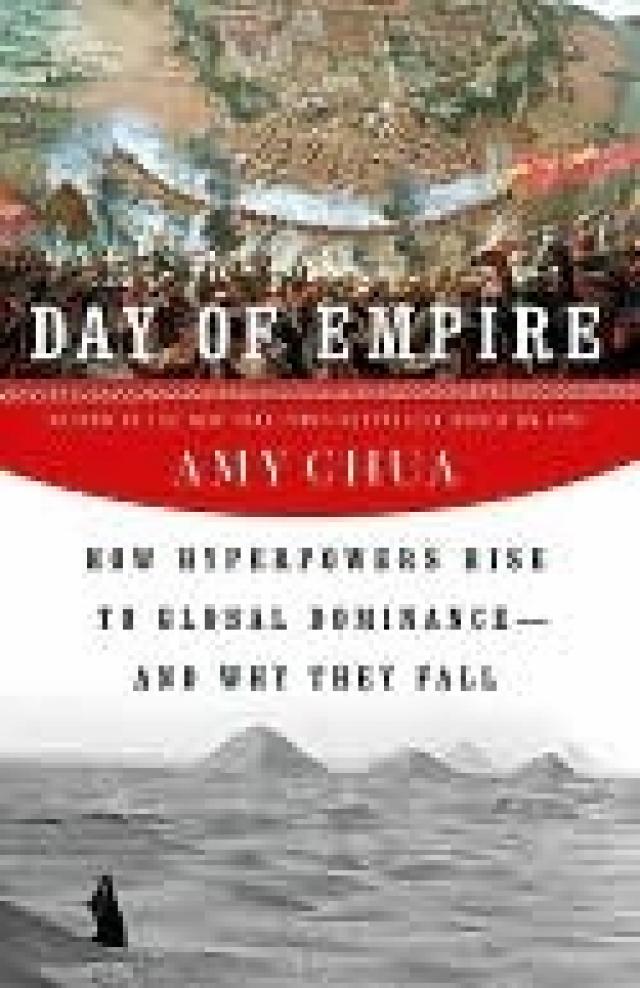
Day of Empire

Day of Empire

Amy Chua

Politics / History / Parenting & Families

In this sweeping history, bestselling author Amy Chua explains how globally dominant empires—or hyperpowers—rise and why they fall. In a series of brilliant chapter-length studies, she examines the most powerful cultures in history—from the ancient empires of Persia and China to the recent global empires of England and the United States—and reveals the reasons behind their success, as well as the roots of their ultimate demise.Chua's analysis uncovers a fascinating historical pattern: while policies of tolerance and assimilation toward conquered peoples are essential for an empire to succeed, the multicultural society that results introduces new tensions and instabilities, threatening to pull the empire apart from within. What this means for the United States' uncertain future is the subject of Chua's provocative and surprising conclusion. From the Trade Paperback edition.
Read online
  • 33
Political Tribes

Political Tribes

Amy Chua

Politics / History / Parenting & Families

From the bestselling author of Battle Hymn of the Tiger Mother and Yale Law School Professor Amy Chua, a bold new look at how longstanding false assumptions about group behavior have been the undoing of America's best laid plans, particularly in our foreign policy We all want—no, are compelled—to be part of the group. Sports teams, churches, companies, nations, races—some groups we belong to voluntarily, others we find ourselves enrolled in at birth. These groups shape our identities. Indeed, in some parts of the world, people kill and die for their group. But where Americans see divisions of ideas—capitalism vs. communism, democracy vs. authoritarianism, the "Free World" vs. the "Axis of Evil"—others see older and deeper group identities, not national or ideological but ethnic, religious, sectarian, and tribal. Time and time again this tendency has undermined American foreign policy. In the Vietnam War,...
Read online
  • 24
Battle Hymn of the Tiger Mother

Battle Hymn of the Tiger Mother

Amy Chua

Politics / History / Parenting & Families

From Publishers WeeklyChua (Day of Empire) imparts the secret behind the stereotypical Asian child's phenomenal success: the Chinese mother. Chua promotes what has traditionally worked very well in raising children: strict, Old World, uncompromising values--and the parents don't have to be Chinese. What they are, however, are different from what she sees as indulgent and permissive Western parents: stressing academic performance above all, never accepting a mediocre grade, insisting on drilling and practice, and instilling respect for authority. Chua and her Jewish husband (both are professors at Yale Law) raised two girls, and her account of their formative years achieving amazing success in school and music performance proves both a model and a cautionary tale. Sophia, the eldest, was dutiful and diligent, leapfrogging over her peers in academics and as a Suzuki piano student; Lulu was also gifted, but defiant, who excelled at the violin but eventually balked at her mother's pushing. Chua's efforts "not to raise a soft, entitled child" will strike American readers as a little scary--removing her children from school for extra practice, public shaming and insults, equating Western parenting with failure--but the results, she claims somewhat glibly in this frank, unapologetic report card, "were hard to quarrel with." (Jan.) (c) Copyright PWxyz, LLC. All rights reserved. FromChua’s stated intent is to present the differences between Western and Chinese parenting styles by sharing experiences with her own children (now teenagers). As the daughter of Chinese immigrants, she is poised to contrast the two disparate styles, even as she points out that being a “Chinese Mother” can cross ethnic lines: it is more a state of mind than a genetic trait. Yet this is a deeply personal story about her two daughters and how their lives are shaped by such demands as Chua’s relentless insistence on straight A’s and daily hours of mandatory music practice, even while vacationing with grandparents. Readers may be stunned by Chua’s explanations of her hard-line style, and her meant-to-be humorous depictions of screaming matches intended to force greatness from her girls. She insists that Western children are no happier than Chinese ones, and that her daughters are the envy of neighbors and friends, because of their poise and musical, athletic, and academic accomplishments. Ironically, this may be read as a cautionary tale that asks just what price should be paid for achievement. --Colleen Mondor
Read online
  • 17
World on Fire World on Fire World on Fire

World on Fire World on Fire World on Fire

Amy Chua

Politics / History / Parenting & Families

For over a decade now, the reigning consensus has held that the combination of free markets and democracy would transform the third world and sweep away the ethnic hatred and religious zealotry associated withunderdevelopment. In this astute, original, and surprising investigation of the true impact of globalization, Yale Law School professor Amy Chua explains why many developing countries are in fact consumed by ethnicviolence after adopting free market democracy. Chua shows how in non-Western countries around the globe, free markets have concentrated starkly disproportionate wealth in the hands of a resented ethnicminority. These "market-dominant minorities" - Chinese in Southeast Asia, Croatians in the former Yugoslavia, whites in Latin America and South Africa, Indians in East Africa, Lebanese in WestAfrica, Jews in post-communist Russia - become objects of violent hatred. At the same time, democracy empowers the impoverished majority, unleashing ethnic demagoguery, confiscation, and sometimes genocidalrevenge. She also argues that the United States has become the world's most visible market-dominant minority, a fact that helps explain the rising tide of anti-Americanism around the world. Chua is a friend ofglobalization, but she urges us to find ways to spread its benefits and curb its most destructive aspects. "From the Trade Paperback edition."
Read online
  • 14
155