I Live in the Future & Here's How It Works: Why Your World, Work, and Brain Are Being Creatively Disrupted

I Live in the Future & Here's How It Works: Why Your World, Work, and Brain Are Being Creatively Disrupted

Nick Bilton

Nonfiction / Crime / Suspense

From Publishers WeeklyIn his first book, Bilton, lead technology writer for the New York Times and an avowed technophile whose professional life is defined by effectively anticipating and analyzing new tech trends, focuses on how mobile devices like iPads and smart phones have changed the corporate landscape. Content distribution, personalized marketing, and protection of profits are of paramount concern to companies, yet many are ill-equipped to address the changing attitudes of the younger generation. While Bilton deftly synthesizes content from the evolution of the porn industry to the relevance of Twitter, he has little to say to people who have actually followed or embraced these tech shifts. But people who view the iPad as a fad or hold their breath for the comeback of conventional newspapers will be educated by Bilton's straightforward analysis. He does a particularly good job of comparing the development of the Internet to past technological advances like the railroad and the printing press (though he could explore more deeply in order to better explain his reasoning). Though savvy readers will find nothing new here, the more technophobic among us will benefit. (c) Copyright PWxyz, LLC. All rights reserved. Review"A bold and provocative look at the future of storytelling. It’s about the virtues of video games, the science of cocktail parties, and the new business model of journalism.  It’s about a world in which the medium is mostly irrelevant, and the message is everything. Read this book if you want to get your message right.”—Jonah Lehrer, author of the_ New York Times_ bestseller_ How We Decide _“Nick Bilton has written ood job of comparing the development of the Internet to past technological advances like the railroad and the printing press (though he could explore more deeply in order to better explain his reasoning). Though savvy readers will find nothing new here, the more technophobic among us will benefit. (c) Copyright PWxyz, LLC. All rights reserved. Review"A bold and provocative look at the future of storytelling. It’s about the virtues of video games, the science of cocktail parties, and the new business model of journalism.  It’s about a world in which the medium is mostly irrelevant, and the message is everything. Read this book if you want to get your message right.”—Jonah Lehrer, author of the_ New York Times_ bestseller_ How We Decide _“Nick Bilton has written a rollicking, upbeat guide to the digital world—a peek into our near future, where news, storytelling, and even human identity are transformed. It’s a fascinating book from a man who has helped pilot the_ New York Times_ into a new age of online journalism. If you’re wondering—or worried—about the future of media, this is your road map.”—Clive Thompson,_ Wired_ magazine columnist and contributing editor “Bilton doesn’t just live in the future, he also understands the past._ I Live in the Future_ explains how our communications tools shaped our present, how new tools are shaping our future, and what we should do to take advantage of all this opportunity.”—Clay Shirky, author of_ Cognitive Surplus_ and_ Here Comes Everybody_Product Details Hardcover: 304 pages Publisher: Crown Business (September 14, 2010) Language: English ISBN-10: 0307591115 ISBN-13:/www.amazon.com/Live-Future-Heres-How-Works/product-reviews/0307591115/ref=dp_db_cm_cr_acr_img?ie=UTF8&showViewpoints=1" name="reviewHistoPop_0307591115_1724_star__contentDiv_reviewHistoPop_0307591115_1724" >4.3 out of 5 stars  ( 15 Reviews (7) (7)3 star:  (0) (1)1 star:  (0)› 
Read online
  • 195
American Kingpin

American Kingpin

Nick Bilton

Nonfiction / Crime / Suspense

From New York Times-bestselling author Nick Bilton comes a true-life thriller about the rise and fall of Ross Ulbricht, aka the Dread Pirate Roberts, the founder of the online black market Silk Road. In Hatching Twitter, Nick Bilton gave readers an astonishingly reported, riveting, and impeccably crafted story of the politics and power struggles behind the founding of Twitter. Now Bilton turns his investigative journalism to the story of Ross Ulbricht, the notorious and enigmatic founder of a drug empire called Silk Road. In 2011, Ulbricht, a 26-year-old libertarian idealist and former Boy Scout, launched "a website where people could buy anything anonymously, with no trail whatsoever that could lead back to them." He called it Silk Road, opened for business on the Dark Web, and christened himself the Dread Pirate Roberts (after the Princess Bride character). The site grew at a tremendous pace, quickly becoming a $1.2 billion enterprise where...
Read online
  • 95
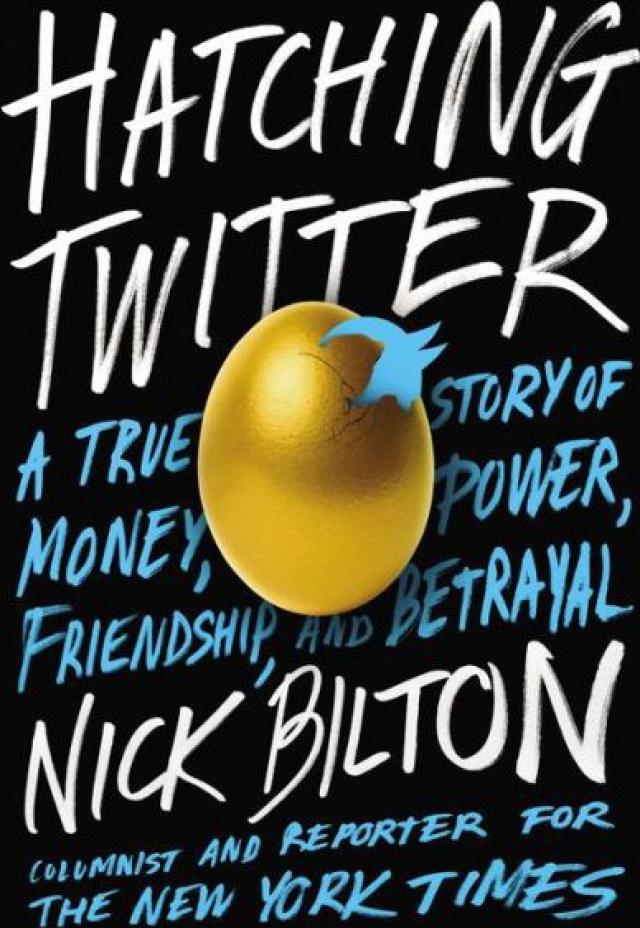
Hatching Twitter: A True Story of Money, Power, Friendship, and Betrayal

Hatching Twitter: A True Story of Money, Power, Friendship, and Betrayal

Nick Bilton

Nonfiction / Crime / Suspense

RetailEv told Jack he had to “chill out” with the deluge of media he was doing. “It’s bad for the company,” Ev said. “It’s sending the wrong message.” Biz sat between them, watching like a spectator at a tennis match.“But I invented Twitter,” Jack said.“No, you didn’t invent Twitter,” Ev replied. “I didn’t invent Twitter either. Neither did Biz. People don’t invent things on the Internet. They simply expand on an idea that already exists.”In 2005, Odeo was a struggling podcasting start-up founded by free-range hacker Noah Glass and staffed by a motley crew of anarchists. Less than two years later, its days were numbered and half the staff had been let go. But out of Odeo’s ashes, the remaining employees worked on a little side venture . . . that by 2013 had become an $11.5 billion business.That much is widely known. But the full story of Twitter’s hatching has never been told before. It’s a drama of betrayed friendships and high-stakes power struggles, as the founders went from everyday engineers to wealthy celebrities featured on magazine covers, The Oprah Winfrey Show, The Daily Show, and Time’s list of the world’s most influential people. New York Times columnist and reporter Nick Bilton takes readers behind the scenes as Twitter grew at exponential speeds. He gets inside the heads of the four hackers out of whom the company tumbled:• Evan “Ev” Williams, the ambitious farm boy from Clarks, Nebraska, who had already created Blogger and sold it to Google for millions. Quiet and protective, Ev is a shrewd businessman who made tough choices in the interest of his companies, firing cofounders and employees who were once friends.• Jack Dorsey, the tattooed “nobody” who helped mastermind the original concept of Twitter, became a billionaire tech titan, and convinced the media that he was the next Steve Jobs. • Christopher “Biz” Stone, the joker and diplomat who played nice with everyone. As drama ensued, he was the only founder who remained on good terms with his friends and to this day has no enduring resentments.• Noah Glass, the shy but energetic geek who invested his whole life in Twitter, only to be kicked out and expunged from the company’s official history.  As Twitter grew, the four founders fought bitterly for money, influence, publicity, and control over a company that grows larger and more powerful by the day. Ultimately they all lost their grip on it. Today, none of them is the CEO. Dick Costolo, a fifty-year-old former comedian, runs the company.By 2013 Twitter boasted close to 300 million active users around the world. In barely six years, the service has become a tool for fighting political oppression in the Middle East, a marketing musthave for business, and the world’s living room during live TV events. Today, notables such as the pope, Oprah Winfrey, and the president of the United States are regular Twitter users. A seventeen-year-old with a mobile phone can now reach a larger audience than an entire crew at CNN.Bilton’s unprecedented access and exhaustive investigating reporting—drawing on hundreds of sources, documents, and internal e-mails—have enabled him to write an intimate portrait of four friends who accidentally changed the world, and what they all learned along the way.**
Read online
  • 58
183